

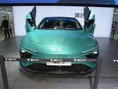
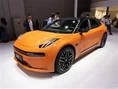
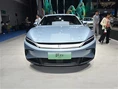
"Electrification, intelligence, networking, and lightweight" have become the development consensus of the auto industry, and the "four modernizations" technology of automobiles has changed the pattern of the traditional automobile industry chain. In addition to traditional links such as complete vehicles and parts, the "four modernizations" technology The various cross-industries driven by it have received key attention. Whether it is traditional car companies, parts manufacturers, or emerging car manufacturers, they may all gain new development opportunities in the green smart car market.
Electrification: the field of new energy power systems. The car drive has changed from fuel to electric, and the battery, motor and electronic control have become the core components of the car. Electrification involves various routes such as BEV (battery power), HEV (gas-electric hybrid), MHEV (mild hybrid), PHEV (plug-in hybrid) and REEV (extended range).
Intelligent: driverless and driver assistance systems. Vehicle intelligence involves many aspects such as intelligent cockpit, intelligent electric (wire control technology), and intelligent driving. The ultimate goal of intelligent driving is to achieve complete automation. Currently, it is mainly to achieve assisted driving (ADAS) below automatic driving L3.
Networking: Internet of Vehicles system. Networking is the core technology to realize assisted driving and even core driving. It mainly uses the Internet of Things and sensor technology to create V2I (vehicle-to-road), V2P (vehicle-to-people), V2N (vehicle-to-vehicle) and V2V (vehicle-to-vehicle). Four major V2X systems.
Lightweight: The overall weight of the car is reduced. Using lightweight materials, lightweight structural design and lightweight technology, reduce the weight of the car itself, in order to achieve energy saving and emission reduction and improve fuel efficiency. New automotive materials and integrated die-casting have become the main industrial opportunities for automotive lightweighting.