
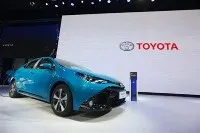



New energy vehicles include pure electric vehicles, extended-range electric vehicles, hybrid electric vehicles, fuel cell electric vehicles, and hydrogen engine vehicles.
Pure electric vehicle
A pure electric vehicle (Battery Electric Vehicles, BEV) is a vehicle that uses a single battery as a power source for energy storage. The rechargeable batteries of pure electric vehicles mainly include lead-acid batteries, nickel-cadmium batteries, nickel-hydrogen batteries and lithium-ion batteries, etc., these batteries can provide power for pure electric vehicles. At the same time, pure electric vehicles also store electrical energy through batteries, drive the motor to run, and allow the vehicle to drive normally.
Hybrid car
Hybrid Electric Vehicle (HEV), whose main drive system is composed of at least two single drive systems that can run at the same time, the driving power of a hybrid vehicle mainly depends on the driving state of the hybrid vehicle: One is provided by a single drive system alone; the second is provided by multiple drive systems together.
Fuel cell electric vehicle
Fuel Cell Electric Vehicle (FCEV), under the action of catalyst, fuel cell electric vehicle uses hydrogen, methanol, natural gas, gasoline, etc. as reactants and oxygen in the air to burn in the battery, and then electric energy is provided for the car. power source. Essentially, fuel cell electric vehicles are also one of electric vehicles, and have many similarities with electric vehicles in many aspects of performance and design. They are divided into two categories because fuel cell electric vehicles use hydrogen, methanol, and natural gas. , gasoline, etc. can be converted into electrical energy through chemical reactions, while pure electric vehicles rely on charging to supplement electrical energy.
Hydrogen engine car
Hydrogen Powered Vehicle (HPV) is mainly fueled by hydrogen-powered fuel cells. Hydrogen-powered vehicles are the most environmentally friendly vehicles among new energy vehicles, which can achieve zero pollution and zero emissions. However, the production cost of hydrogen-powered vehicles is too high. The cost of hydrogen-powered vehicles is 20% higher than that of traditional fuel vehicles. Moreover, the battery cost of hydrogen-powered vehicles is very high. In actual production, it is limited by storage and transportation conditions. practical application.
Extended-range electric vehicle
The Extended Range Electric Vehicle (EREV) is similar to an electric vehicle. The battery provides kinetic energy to the motor to drive the motor to run, thereby propelling the vehicle. However, the extended-range electric vehicle is equipped with a gasoline or diesel engine in the body, and the driver can use this engine to replenish the power of the extended-range electric vehicle when the battery of the extended-range electric vehicle is too low.
Methanol car
Cars that use methanol instead of petroleum fuel.
Pneumatic car
Compressed air powered vehicles (Airpowerd vehiele-APV), referred to as pneumatic vehicles, use high-pressure compressed air as a power source to convert the pressure energy stored in the compressed air into other forms of mechanical energy, thereby driving the vehicle to run. Theoretically speaking, other gas-powered vehicles, such as liquid air and liquid nitrogen, which absorb heat and expand as power, should also belong to the category of pneumatic vehicles.
Flywheel energy storage vehicle
The process in which part of the kinetic energy or gravitational potential energy of the vehicle is converted into other forms of energy during the deceleration, coasting or braking deceleration process and is stored in the high-speed flywheel for use by the vehicle. The flywheel uses magnetic levitation and rotates at a high speed of 70000r/min. As an assistant in hybrid vehicles, the advantages are that it can improve energy efficiency, light weight and high energy storage, fast energy in and out response, less maintenance, and long life.
Super capacitor car
Supercapacitors are capacitors that utilize the principle of electric double layers. Under the action of the electric field generated by the charges on the two plates of the supercapacitor, opposite charges are formed at the interface between the electrolyte and the electrodes to balance the internal electric field of the electrolyte. The positive and negative charges are between two different phases. On the contact surface, the positive and negative charges are arranged in opposite positions with a very short gap between them. This charge distribution layer is called an electric double layer, so the capacitance is very large. (2010 Shanghai World Expo Park World Expo Special Line has used this car) The hybrid power supply composed of super capacitor and battery can fully meet the energy demand of the vehicle when driving, and can buffer the impact of instantaneous high power on the energy storage system and prolong the service life of the battery. Moreover, the supercapacitor can be charged with instantaneous high current, which can return energy more efficiently.