
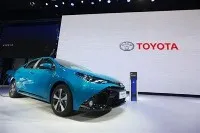

In early trading on December 21, Toyota Motor's stock price fell 5.6%, setting the stock's largest single-day decline in the Japanese stock market since May 2022.
According to China-Singapore Jingwei citing a Reuters report on the 21st, Toyota recalled 1.12 million vehicles due to potential airbag issues.According to reports, Toyota said on Wednesday that it would recall 1.12 million vehicles worldwide because a short circuit in the sensor may cause the airbags to fail to deploy as designed. The dealer will inspect and replace the sensor if necessary. Toyota plans to start notifying owners of the recall in February.
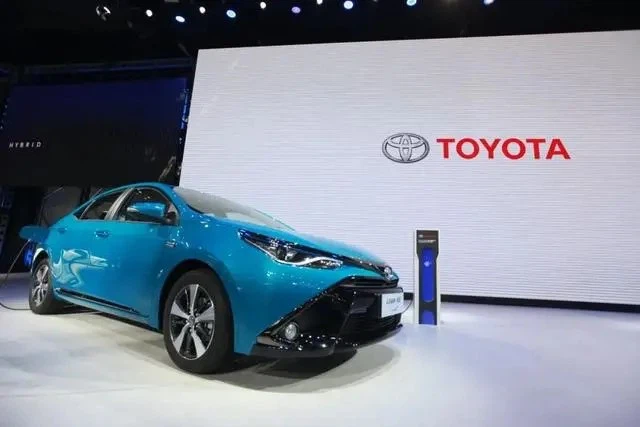
According to reports, the recall covers models from 2020 to 2022, including Avalon, Camry, Corolla, Rongfang, Lexus ES250, ES300H, ES350, Highlander, Sienna and other models.The report also mentioned that Toyota recalled 3,500 Rongfang vehicles in the United States in July 2022 because of potential interference between internal parts, which may cause incorrect detection by the OCS sensor.
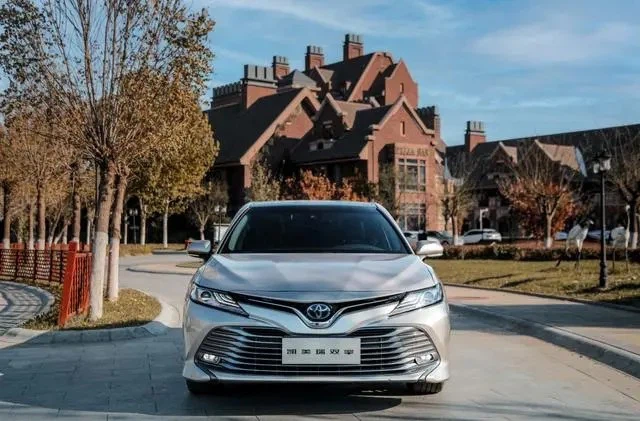
According to CCTV news reports, Kyodo News Agency of Japan stated that Toyota announced on the 20th local time that it would stop the shipment of Toyota brand cars such as ROOMY and PROBOX produced by Daihatsu.
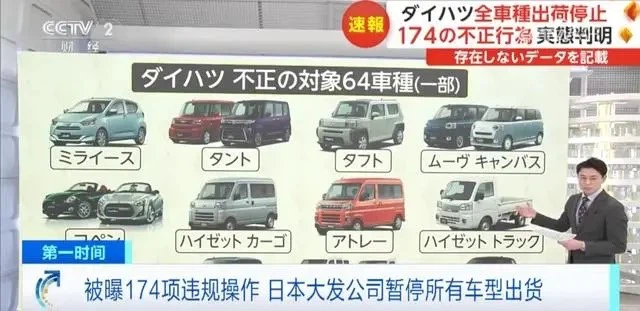
Japan's Kyodo News Agency stated that a third-party committee investigating Daihatsu Industries' quality violations issued a report on the 20th. The quality violations were expanded to almost all models, including Toyota Motor and other company brand vehicles. There were 64 models with violations.
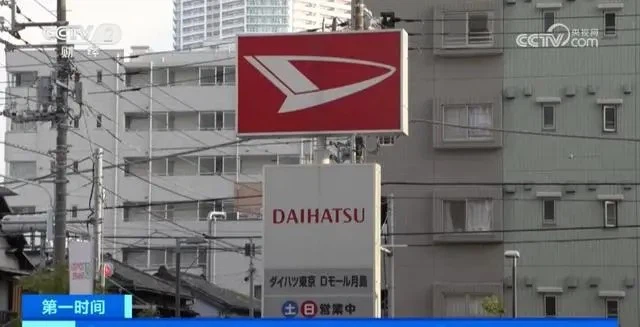
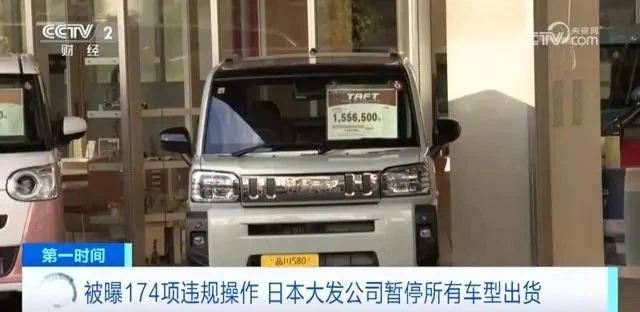
Daihatsu, a wholly-owned subsidiary of Toyota Motor, has decided to stop the shipment of all models sold domestically and abroad. Toyota has also stopped the shipment of some models.
According to reports, the above-mentioned third-party committee stated that it discovered 174 new violations, including false records in documents, and the target models also include cars supplied to Mazda and Subaru in the form of OEM production. All 11 models currently on sale, including Daihatsu's Tanto, as well as 8 models including Toyota's RAIZE, 6 Subaru models, and 2 Mazda models, have been suspended from domestic shipments due to violations. The violations also involve discontinued models.
It is worth noting that this is not the first time the company has been exposed to violations. According to the Daily Economic News, earlier in 2023, Daihatsu was also exposed to illegal operations involving car door trims and car side impact safety tests.
In May 2023, Daihatsu Motor issued an announcement stating that in order to cope with side impact tests, the front seat door linings (Door Trim) of its four models were "improperly modified" to minimize the test risks. This can Avoid sharp edges inside the door that could cause injury to passengers when the side airbags deploy in an accident.
In fact, this is not the first time that a Toyota subsidiary has experienced data fraud. In August 2022, Hino Motors (Hino Motors Co., Ltd.) officially announced the results of a special investigation committee composed of external lawyers and others into its engine exhaust and fuel consumption data falsification scandal that was exposed on March 4 this year.
The investigation results show that Hino Motors' improper behavior can be roughly divided into three aspects, including violations related to engine exhaust emissions and fuel consumption data. When Japan's Ministry of Land, Infrastructure, Transport and Tourism investigated exhaust emissions and fuel consumption data in 2016, Hino Motors submitted a False reporting. Among them, Hino Motors' related violations in terms of exhaust emissions began at least in 2003. This time point is much earlier than 2016, which Hino Motors previously announced, and it is nearly 20 years ago.
After the Hino Motors fraud scandal was exposed, Japan's Ministry of Land, Infrastructure, Transport and Tourism revoked the production license for the relevant vehicles. This measure was the first in Japan. At the same time, Hino Motors recalled more than 46,000 vehicles.
According to CCTV Finance reports, in early November 2023, Toyota and its wholly-owned subsidiary Daihatsu Industrial recalled a total of nearly 600,000 vehicles. According to Japanese media reports, the reason is that the fuel pump produced by Japan's largest auto parts manufacturer Denso Company is defective, which may cause the vehicle to stall while driving.
It is worth mentioning that while its subsidiaries were exposed for quality violations and data falsification, according to CCTV News, Toyota Motor Corporation announced on December 20, local time, that the company's airbags sold in Canada and the United States had potential quality issues. About 1 million cars need to be recalled.
Toyota Motor Corp. said the recall involves a range of Toyota and Lexus vehicles from model years 2020 to 2022. The sensors in the front passenger seats of these vehicles may short-circuit due to manufacturing issues, causing the airbag system to be unable to determine the correct weight of the occupant and risk failing to deploy in a collision.
Previously, on November 22, Toyota Motor Corporation recalled two vehicles in Japan, totaling more than 580,000 vehicles, due to problems such as the foot-operated handbrake pedal being not securely installed, which may result in the inability to use the handbrake function normally. This is the second recall in November. It is understood that these two models are not sold in the Chinese market.
From the perspective of the domestic market, according to news released on the website of the State Administration for Market Regulation on December 21, FAW Toyota Motor Co., Ltd. recently reported to the state in accordance with the requirements of the "Regulations on the Management of Recalls of Defective Automobile Products" and the "Implementation Measures of the Regulations on the Management of Recalls of Defective Automobile Products". The State Administration for Market Regulation has filed a recall plan. It has been decided to recall some bZ3 electric vehicles produced between March 13, 2023 and November 9, 2023, from now on, a total of 25,815 vehicles.
Some vehicles within the scope of this recall have imperfect power battery management controller programs. When the vehicle is not fully charged for many times in a row and continues to drive at high speed, the remaining power estimate deviation is too large, and the remaining power of the power battery displayed on the instrument is too high. to the actual remaining power. In extreme cases, the vehicle loses power before the charging warning light comes on, posing a safety hazard.
FAW Toyota Motor Co., Ltd. will use vehicle remote upgrade (OTA) technology to upgrade the control program of the battery management controller for vehicles within the recall scope free of charge to eliminate safety hazards.
Perhaps due to the combined impact of the above-mentioned events, Toyota Motor's stock price fell 5.6% in early trading on December 21, setting the stock's largest single-day decline in the Japanese stock market since May 2022; in the U.S. stock market, Toyota Motor (TM.US) The decline reached 2.18% on December 20 and continued to fall after the market closed.